
Page Summary
-
This dataset of Landsat 8 Collection 1 Tier 1 composites contains the Burn Area Index (BAI), which measures the spectral distance of pixels from a reference spectral point to emphasize the charcoal signal in post-fire images.
-
The composites are created from all scenes in each 32-day period, with the most recent pixel used as the composite value.
-
The dataset is available from 2013-04-07 to 2022-01-01 and is provided by Google.
-
Landsat datasets are in the public domain and can be used without copyright restriction, with acknowledgement of the USGS as the data source recommended.
-
This dataset has been superseded by LANDSAT/COMPOSITES/C02/T1_L2_32DAY_BAI.
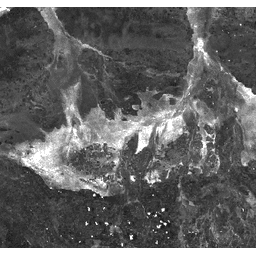
- Dataset Availability
- 2013-04-07T00:00:00Z–2022-01-01T00:00:00Z
- Dataset Producer
- Tags
Description
These Landsat 8 Collection 1 Tier 1 composites are made from Tier 1 orthorectified scenes, using the computed top-of-atmosphere (TOA) reflectance. See Chander et al. (2009) for details on the TOA computation.
The Burn Area Index (BAI) is generated from the Red and Near-IR bands, and measures the spectral distance of each pixel from a reference spectral point (the measured reflectance of charcoal). This index is intended to emphasize the charcoal signal in post-fire images. See Chuvieco et al. (2002) for details.
These composites are created from all the scenes in each 32-day period beginning from the first day of the year and continuing to the 352nd day of the year. The last composite of the year, beginning on day 353, will overlap the first composite of the following year by 20 days. All the images from each 32-day period are included in the composite, with the most recent pixel as the composite value.
Bands
Bands
| Name | Pixel Size | Description |
|---|---|---|
BAI |
30 meters | Burn Area Index |
Terms of Use
Terms of Use
Landsat datasets are federally created data and therefore reside in the public domain and may be used, transferred, or reproduced without copyright restriction.
Acknowledgement or credit of the USGS as data source should be provided by including a line of text citation such as the example shown below.
(Product, Image, Photograph, or Dataset Name) courtesy of the U.S. Geological Survey
Example: Landsat-7 image courtesy of the U.S. Geological Survey
See the USGS Visual Identity System Guidance for further details on proper citation and acknowledgement of USGS products.