Find the best way to set up the Google tag gateway based on your existing infrastructure. Answer the following questions to get a recommendation for you.
Which of the following do you have? Select the first that applies.
Benefits of using Google tag gateway with CDN and SGTM
Combining Google tag gateway (GTG) with CDN and server-side Google Tag Manager (SGTM) offers a powerful and efficient tagging infrastructure:
- Enhanced performance & reliability: Google scripts (like gtm.js or gtag.js) are served quickly from your own domain through your Content Delivery Network (CDN). This reduces latency for users and offloads static asset serving from your SGTM server.
- Improved measurement durability: By serving scripts from and sending data to your first-party domain, this setup is more durable leading to more complete data.
- Greater data control & security: SGTM lets you manage data in a secure server-side environment. You can cleanse, enrich, and control exactly what data is forwarded to Google and other advertising or analytics platforms, reducing the amount of third-party JavaScript running in the browser.
- Centralized & flexible tag management: Use the familiar Google Tag Manager interface to manage both your web container and your server container, providing a holistic view and control over your tagging setup.
How it works:
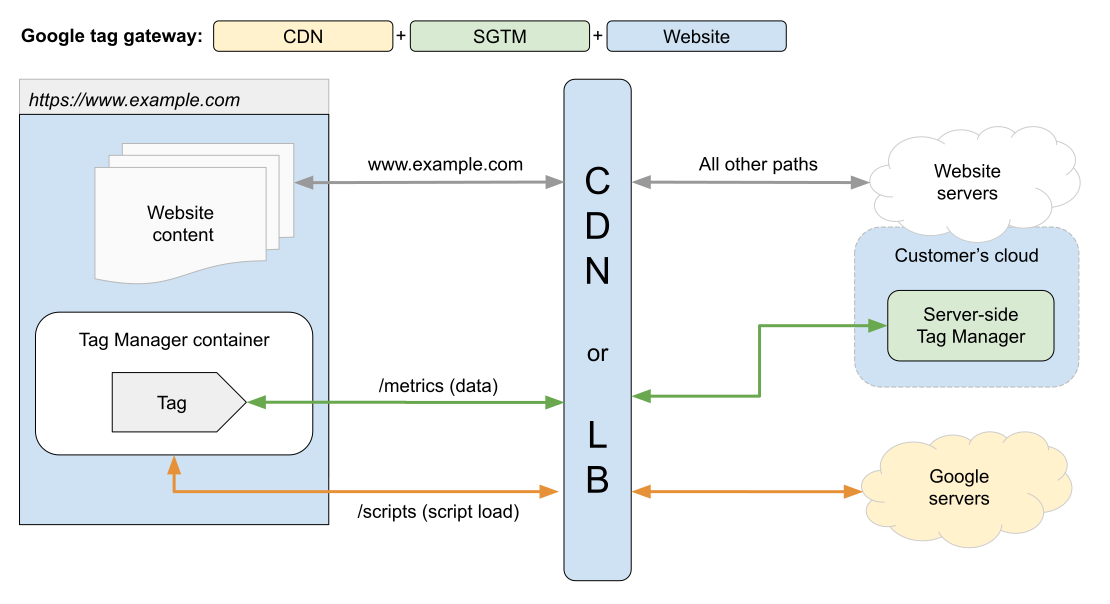 Example conceptual diagram.
Your CDN, configured with GTG, handles requests for Google scripts, serving them from your domain. Measurement data is sent to a separate endpoint on your domain (e.g., example.com/metrics), which routes to your SGTM container. SGTM then processes this data before sending it to the final destinations.