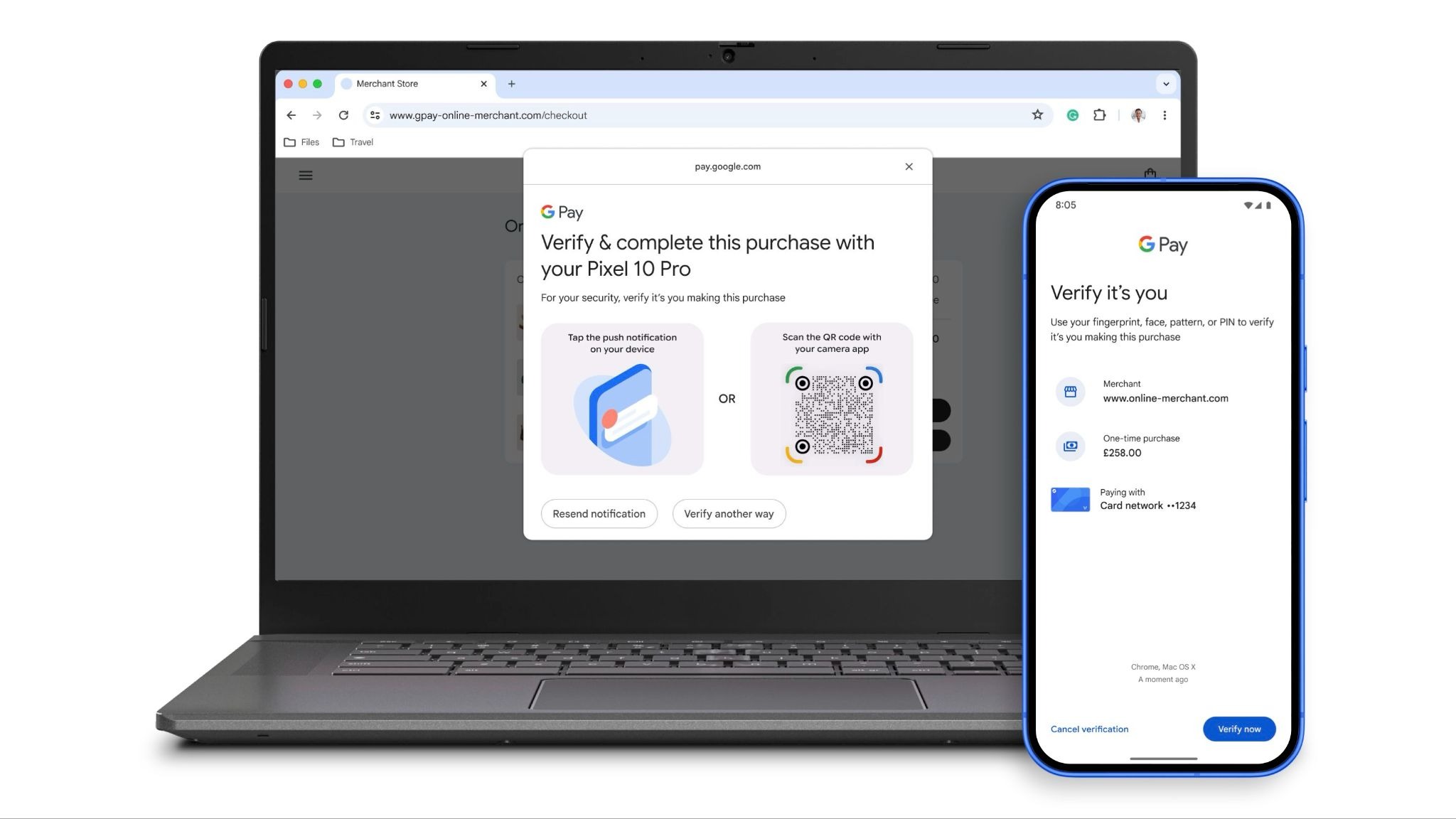
The new Cross-device Payment Verification for Google Pay makes desktop checkout a seamless process, like unlocking your phone.
Where desktop shoppers encounter clunky checkouts and abandon their carts when navigating multi-factor authentication steps, the Cross-device Payment Verification feature transforms the desktop shopping experience into a secure, mobile-first authentication journey. It addresses the common issue where customers abandon their carts due to cumbersome multi-factor authentication steps during checkout.
What is Cross-device for Google Pay?
Cross-device creates a bridge between desktop and mobile, allowing customers to complete online transactions seamlessly and securely using Google Pay Device Tokens.
For qualifying transactions, desktop users will be prompted to authenticate on their mobile device using a secure push notification or by scanning a QR code. They can then approve the payment by unlocking their phone using a biometric, such as face unlock, a fingerprint, or a PIN on their trusted Android device. Our user research indicates that buyers perceive this flow as highly secure and convenient, offering speed while reducing friction.
Benefits of Cross-device Payment Verification
Here's why Cross-device is good for businesses and customers:
Effortlessly supports regulatory compliance by design: Cross-device offers a user-friendly way to help merchants address MFA and regional requirements like the EU and UK's Strong Customer Authentication (SCA) requirements.
Reduces cart abandonment and boosts sales: It offers a streamlined alternative to one-time passwords and additional redirects that can disrupt the checkout flow. By facilitating authentication using a push notification, it reduces checkout friction, supporting higher conversion rates.
Enhances security and helps prevent fraud: Using a trusted device with biometrics or pin authentication adds a robust layer of verification to transactions. Additionally, Cross-device leverages Google Pay's secure, device bound tokenized credentials, so that businesses may benefit from network liability shift for eligible transactions.