
- 利用可能なデータセットの期間
- 2000-01-01T00:00:00Z–2020-01-01T00:00:00Z
- データセット プロデューサー
- CIESIN
- ケイデンス
- 5 年
- タグ
説明
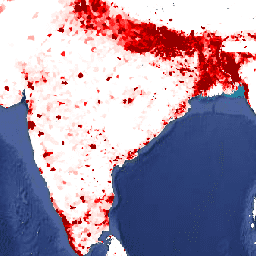
Gridded Population of World Version 4(GPWv4)は、2000 年、2005 年、2010 年、2015 年、2020 年の世界の人口分布を 30 秒角(約 1 km)のグリッド セルでモデル化します。人口は、国勢調査と行政単位の人口の比例配分を使用してセルに分布します。人口入力データは、2005 年から 2014 年の間に実施された 2010 年の国勢調査の結果から得られる最も詳細な空間解像度で収集されます。入力データが外挿され、モデル化された各年の人口推定値が生成されます。
これらの人口密度グリッドには、30 秒角のグリッド セルあたりの人口数の推定値が含まれています。これは、相対的な空間分布に関して国勢調査や人口登録と一致していますが、国連の世界人口予測の 2015 年改訂版の国別合計と一致するように調整されています。モデル化された年ごとに 1 つの画像があります。
バンド
バンド
ピクセルサイズ: 927.67 メートル(すべてのバンド)
| 名前 | 最小 | 最大 | ピクセルサイズ | 説明 |
|---|---|---|---|---|
population-density |
0* | 3.83667e+06* | 927.67 メートル | 1 平方キロメートルあたりの推定人数。 |
利用規約
利用規約
引用
引用:
コロンビア大学国際地球科学情報ネットワーク センター(CIESIN)。2016 年。Gridded Population of the World, Version 4(GPWv4): 国連 WPP の 2015 年改訂版の国別合計に一致するように調整された人口密度。ニューヨーク州パリセーズ: NASA Socioeconomic Data and Applications Center(SEDAC)。https://doi.org/10.7927/H4HX19NJ。アクセスした日、月、年。
DOI
Earth Engine で探索する
コードエディタ(JavaScript)
var dataset =
    ee.ImageCollection('CIESIN/GPWv4/unwpp-adjusted-population-density');
var populationDensity = dataset.select('population-density')
  .filter(ee.Filter.date('2010-01-01', '2010-12-31'));
var populationDensityVis = {
  min: 200.0,
  max: 1500.0,
  palette: ['ffffff', 'ffcdc6', 'ff0000', '950000'],
};
Map.setCenter(79.1, 19.81, 3);
Map.addLayer(populationDensity, populationDensityVis, 'Population Density');