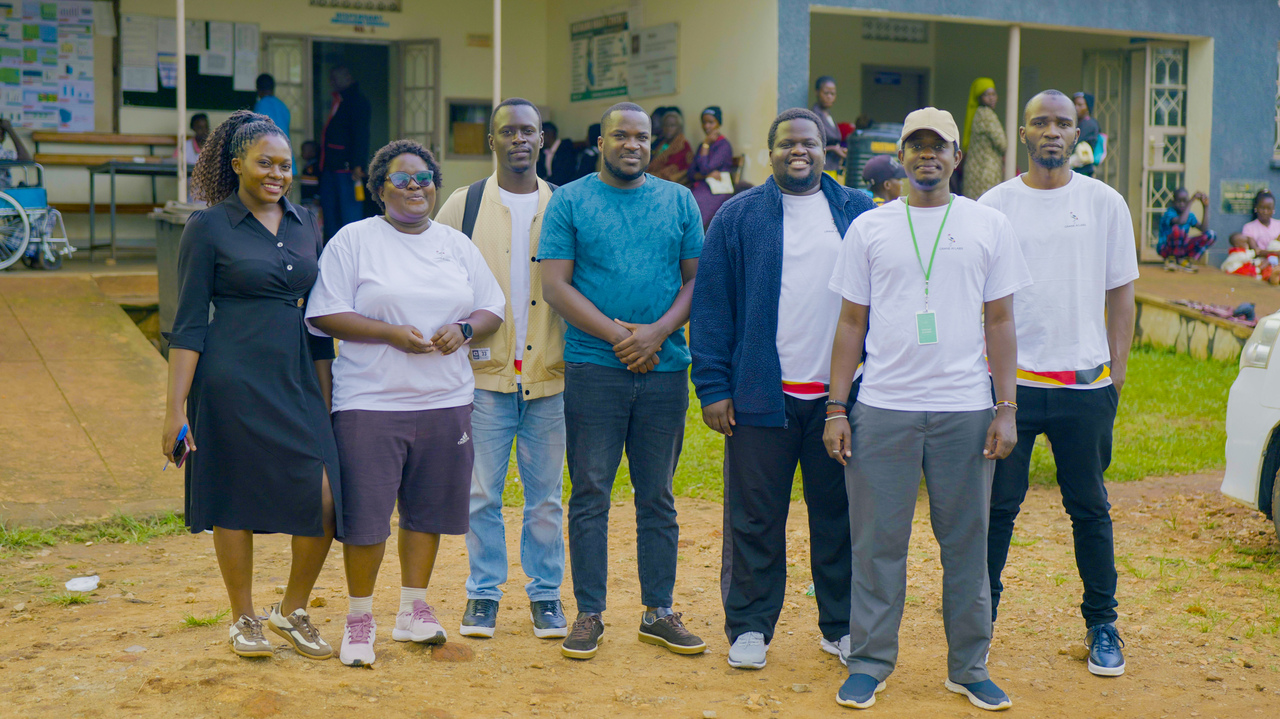
In rural Uganda, frontline health workers at select health facilities often must make clinical decisions alone — without access to specialist support, reliable internet, or current clinical guidelines. A single midwife or clinical officer may manage a complicated delivery, severe pneumonia, or neonatal emergency hours from the nearest hospital, with no senior doctor reachable by phone. A thoughtfully developed system that operates on-device and is grounded in national guidelines has the potential to make a profound impact in supporting frontline health workers' clinical decision making when no other resource is available.
Crane AI Labs built EaseHealth — an offline-first AI clinical decision support application for Android smartphones. EaseHealth runs a fine-tuned instance of MedGemma 4B and MedASR entirely on-device with zero cloud dependency, grounded in the most recent Uganda Clinical Guidelines. It supports clinical reasoning across maternal health, child health, malaria, pneumonia, and TB. The tool generates structured assessments including red flags, suggested checks, and confidence scores, but deliberately excludes dosage recommendations as a safety measure.
MedGemma 4B provided the medical reasoning foundation that no offline-capable general-purpose model could match. Crane AI Labs quantized MedGemma for on-device deployment on Samsung A16 devices (8GB RAM), achieving 40-second warm-start inference. The model runs without internet, API calls, or per-token costs. Before MedGemma, Crane AI Labs tested general-purpose models but found unacceptable hallucination rates in clinical contexts. MedGemma's medical pre-training reduced clinically dangerous outputs significantly. Crane AI Labs further reduced hallucination by 62% through prompt engineering and safety filtering, with forced confidence scoring on every assessment.
EaseHealth underwent formally approved feasibility testing under full ethics and regulatory oversight across 15 health facilities in Luweero District (population over 600K). 268 health workers consented to participate and 87+ clinical assessments were captured entirely offline during the 5-day field testing. During the feasibility testing, an enrolled midwife spontaneously used EaseHealth during a complicated four-hour delivery which flagged eclampsia as a risk. Serving as a clinical decision support tool, the app did not replace clinical judgment or direct patient management. The midwife investigated, ran appropriate checks, ruled out the complication on evidence, and made her own clinical decision. The mother delivered safely. The case was clinically verified by Crane AI Labs' clinical partners.
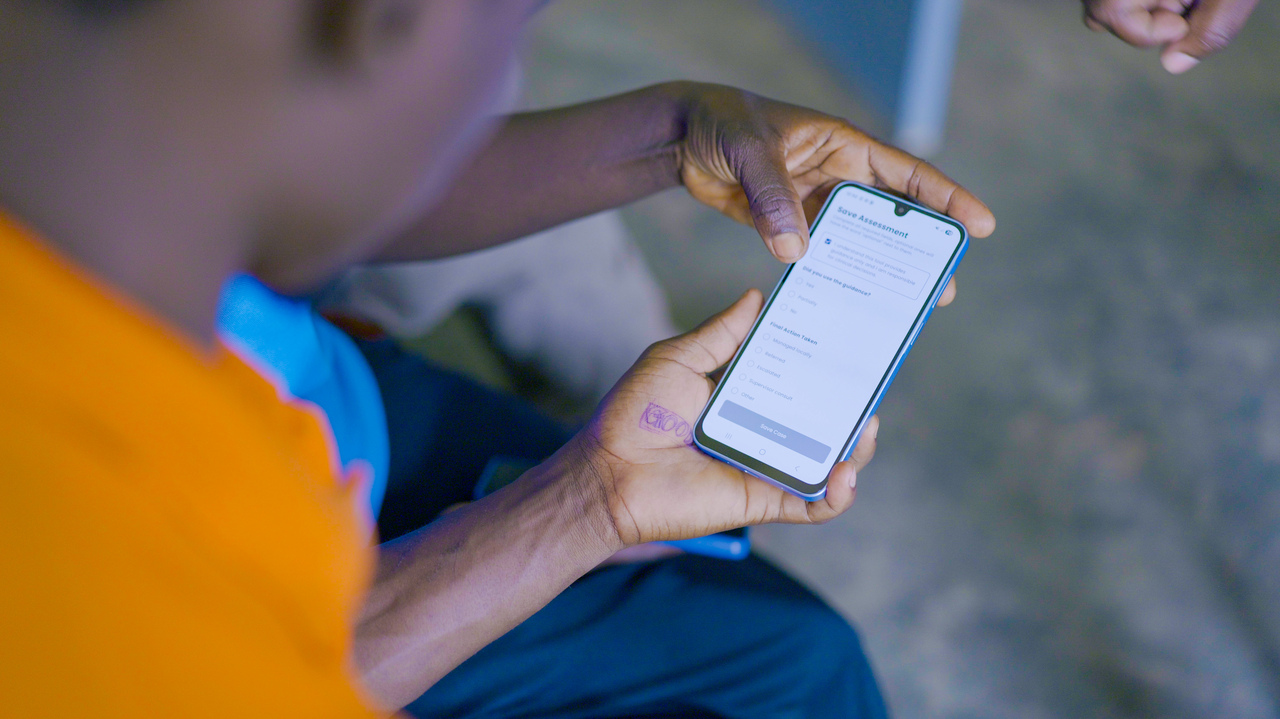
"It doesn't prescribe. It guides. It makes you ask the right questions."
— Apollo Wamono, Clinical Officer from Luweero District
From this feasibility study, Crane AI Labs have identified the device gap as a primary barrier to scaling, wherein the majority of health workers' mobile phones have insufficient RAM to run these models locally. Current efforts are evaluating approaches to further reduce model size, including compression beyond the Quantization-Aware Training already applied during fine-tuning, and evaluating whether newer architectures in the Gemma model family enable deployment on 4GB devices. The team is also extending the deployment through an additional funded sprint covering clinical accuracy validation, local language support and device compatibility analysis across Android chipsets. There are also plans to evaluate expansion to other regions, including East Africa.