# DSPL Schema
This page and its linked subpages document the DSPL XML schema.
This material is intended for advanced users who want to understand
the low-level details of the language; for most users, the content
in the [Developer Guide](https://developers.google.com/public-data/docs/developer_guide) should be sufficient for creating and editing
DSPL datasets.
The complete XML schema is available for download in XSD format
on the [DSPL code site](https://code.google.com/p/dspl/downloads/list).
## Element: dspl
| Namespace | http://schemas.google.com/dspl/2010 |
| Annotations | A DSPL specification describes a dataset. A dataset is identified by its namespace. A dataset is comprised of the following elements: - Tables: Data for the concepts and slices defined in the dataset - Concepts: User-specified definitions and structures used in the dataset - Slices: Combinations of dimensions and metrics present in the dataset - Topics: Hierarchical labels used to organise the concepts of the dataset |
| Diagram | 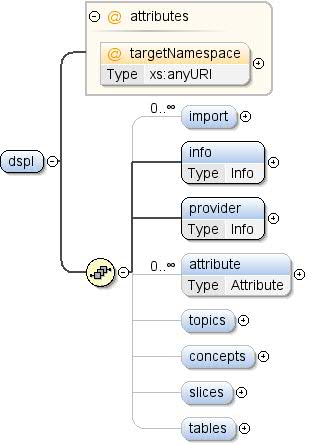 |
| Properties | | content: | complex | |---|---| |
| Model | [import\*](https://developers.google.com/public-data/docs/schema/dspl9#id2) , [info](https://developers.google.com/public-data/docs/schema/dspl9#id5) , [provider](https://developers.google.com/public-data/docs/schema/dspl9#id16) , [attribute\*](https://developers.google.com/public-data/docs/schema/dspl9#id17) , [topics{0,1}](https://developers.google.com/public-data/docs/schema/dspl9#id27) , [concepts{0,1}](https://developers.google.com/public-data/docs/schema/dspl9#id35) , [slices{0,1}](https://developers.google.com/public-data/docs/schema/dspl9#id68) , [tables{0,1}](https://developers.google.com/public-data/docs/schema/dspl9#id86) |
| Children | [attribute](https://developers.google.com/public-data/docs/schema/dspl9#id17), [concepts](https://developers.google.com/public-data/docs/schema/dspl9#id35), [import](https://developers.google.com/public-data/docs/schema/dspl9#id2), [info](https://developers.google.com/public-data/docs/schema/dspl9#id5), [provider](https://developers.google.com/public-data/docs/schema/dspl9#id16), [slices](https://developers.google.com/public-data/docs/schema/dspl9#id68), [tables](https://developers.google.com/public-data/docs/schema/dspl9#id86), [topics](https://developers.google.com/public-data/docs/schema/dspl9#id27) |
| Instance | ``` {0,unbounded} {1,1} {1,1} {0,unbounded} {0,1} {0,1} {0,1} {0,1} ``` |
| Attributes | | QName | Type | Fixed | Default | Use | Annotation | | [targetNamespace](https://developers.google.com/public-data/docs/schema/dspl9#id103) | xs:anyURI | | | optional | Each dataset may provide a target namespace. The target namespace is a URI that uniquely identifies the dataset. For more information about the use of namespaces in XML, see: http://www.w3.org/TR/REC-xml-names/ If no targetNamespace is provided, then a namespace will be generated when the dataset is imported. | |---|---|---|---|---|---| |
| Source | ``` A DSPL specification describes a dataset. A dataset is identified by its namespace. A dataset is comprised of the following elements: - Tables: Data for the concepts and slices defined in the dataset - Concepts: User-specified definitions and structures used in the dataset - Slices: Combinations of dimensions and metrics present in the dataset - Topics: Hierarchical labels used to organise the concepts of the dataset Import directive for external datasets -- modeled after the XML Schema import directive. In order to use elements defined in an external dataset, the external dataset must be referenced using an import directive. The namespace of the imported dataset, specified as a URI. A prefix must be associated with this namespace before its contents can be referenced. See [XML Namespaces] for more information about the use of namespaces and prefixes in XML. An optional location where the definition of the imported dataset can be found, specified as a URL. If the location is omitted, the system processing this DSPL dataset must already know the imported dataset. Implementation note: The Google dataset importer ignores the location attribute. Any imported dataset must be known by the Google importer beforehand. General information about the dataset. General information about the dataset provider. Attribute associated with the dataset. A hierarchy of topics used to organize the contents of the dataset. The order in which topics are given is meaningful and should be respected by visualizations that displays these topics. A list of concepts defined in this dataset. A list of slices defined in this dataset. A list of tables defined in this dataset. Each dataset may provide a target namespace. The target namespace is a URI that uniquely identifies the dataset. For more information about the use of namespaces in XML, see: http://www.w3.org/TR/REC-xml-names/ If no targetNamespace is provided, then a namespace will be generated when the dataset is imported. ``` |
|---|---|
## Element: [dspl](https://developers.google.com/public-data/docs/schema/dspl9#id1) / import
| Namespace | http://schemas.google.com/dspl/2010 |
| Annotations | Import directive for external datasets -- modeled after the XML Schema import directive. In order to use elements defined in an external dataset, the external dataset must be referenced using an import directive. |
| Diagram | 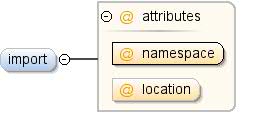 |
| Properties | | content: | complex | | minOccurs: | 0 | | maxOccurs: | unbounded | |---|---| |
| Attributes | | QName | Type | Fixed | Default | Use | Annotation | | [location](https://developers.google.com/public-data/docs/schema/dspl9#id4) | | | | optional | An optional location where the definition of the imported dataset can be found, specified as a URL. If the location is omitted, the system processing this DSPL dataset must already know the imported dataset. Implementation note: The Google dataset importer ignores the location attribute. Any imported dataset must be known by the Google importer beforehand. | | [namespace](https://developers.google.com/public-data/docs/schema/dspl9#id3) | | | | required | The namespace of the imported dataset, specified as a URI. A prefix must be associated with this namespace before its contents can be referenced. See \[XML Namespaces\] for more information about the use of namespaces and prefixes in XML. | |---|---|---|---|---|---| |
| Source | ``` Import directive for external datasets -- modeled after the XML Schema import directive. In order to use elements defined in an external dataset, the external dataset must be referenced using an import directive. The namespace of the imported dataset, specified as a URI. A prefix must be associated with this namespace before its contents can be referenced. See [XML Namespaces] for more information about the use of namespaces and prefixes in XML. An optional location where the definition of the imported dataset can be found, specified as a URL. If the location is omitted, the system processing this DSPL dataset must already know the imported dataset. Implementation note: The Google dataset importer ignores the location attribute. Any imported dataset must be known by the Google importer beforehand. ``` |
|---|---|
## Element: [dspl](https://developers.google.com/public-data/docs/schema/dspl9#id1) / info
| Namespace | http://schemas.google.com/dspl/2010 |
| Annotations | General information about the dataset. |
| Diagram | 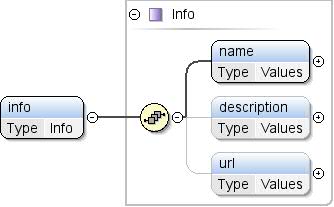 |
| Type | [Info](https://developers.google.com/public-data/docs/schema/dspl4#id6) |
| Properties | | content: | complex | | minOccurs: | 1 | |---|---| |
| Model | [name](https://developers.google.com/public-data/docs/schema/dspl4#id7) , [description{0,1}](https://developers.google.com/public-data/docs/schema/dspl4#id14) , [url{0,1}](https://developers.google.com/public-data/docs/schema/dspl4#id15) |
| Children | [description](https://developers.google.com/public-data/docs/schema/dspl4#id14), [name](https://developers.google.com/public-data/docs/schema/dspl4#id7), [url](https://developers.google.com/public-data/docs/schema/dspl4#id15) |
| Instance | ``` {1,1} {0,1} {0,1} ``` |
| Source | ``` General information about the dataset. ``` |
|---|---|
## Element: [dspl](https://developers.google.com/public-data/docs/schema/dspl9#id1) / provider
| Namespace | http://schemas.google.com/dspl/2010 |
| Annotations | General information about the dataset provider. |
| Diagram | 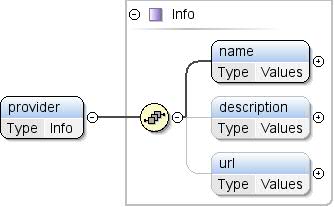 |
| Type | [Info](https://developers.google.com/public-data/docs/schema/dspl4#id6) |
| Properties | | content: | complex | |---|---| |
| Model | [name](https://developers.google.com/public-data/docs/schema/dspl4#id7) , [description{0,1}](https://developers.google.com/public-data/docs/schema/dspl4#id14) , [url{0,1}](https://developers.google.com/public-data/docs/schema/dspl4#id15) |
| Children | [description](https://developers.google.com/public-data/docs/schema/dspl4#id14), [name](https://developers.google.com/public-data/docs/schema/dspl4#id7), [url](https://developers.google.com/public-data/docs/schema/dspl4#id15) |
| Instance | ``` {1,1} {0,1} {0,1} ``` |
| Source | ``` General information about the dataset provider. ``` |
|---|---|
## Element: [dspl](https://developers.google.com/public-data/docs/schema/dspl9#id1) / attribute
| Namespace | http://schemas.google.com/dspl/2010 |
| Annotations | Attribute associated with the dataset. |
| Diagram | 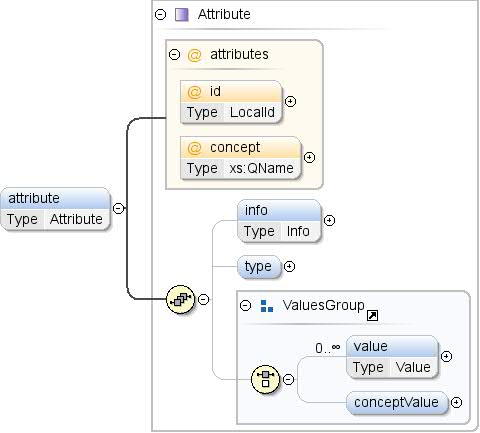 |
| Type | [Attribute](https://developers.google.com/public-data/docs/schema/dspl14#id18) |
| Properties | | content: | complex | | minOccurs: | 0 | | maxOccurs: | unbounded | |---|---| |
| Model | [info{0,1}](https://developers.google.com/public-data/docs/schema/dspl14#id19) , [type{0,1}](https://developers.google.com/public-data/docs/schema/dspl14#id20) , ([value\*](https://developers.google.com/public-data/docs/schema/dspl0#id10) \| [conceptValue{0,1}](https://developers.google.com/public-data/docs/schema/dspl0#id12)) |
| Children | [conceptValue](https://developers.google.com/public-data/docs/schema/dspl0#id12), [info](https://developers.google.com/public-data/docs/schema/dspl14#id19), [type](https://developers.google.com/public-data/docs/schema/dspl14#id20), [value](https://developers.google.com/public-data/docs/schema/dspl0#id10) |
| Instance | ``` {0,1} {0,1} ``` |
| Attributes | | QName | Type | Fixed | Default | Use | Annotation | | [concept](https://developers.google.com/public-data/docs/schema/dspl14#id26) | xs:QName | | | optional | A reference to a concept that corresponds to the values of the attribute. If the attribute specifies a type, then the type must match the type of the referenced concept. A reference to an external concept must be of the form "prefix:other_concept_id", where "prefix" is the prefix used for the namespace of the external dataset (see XML namespaces). | | [id](https://developers.google.com/public-data/docs/schema/dspl14#id24) | [LocalId](https://developers.google.com/public-data/docs/schema/dspl17#id25) | | | optional | The id of the concept attribute. This identifier must be unique within the concept (across attributes and properties). The id may be omitted if the concept attribute is specified. In that case, an id is implicity created with value the local name of the referenced concept. For instance \ is equivalent to \ | |---|---|---|---|---|---| |
| Source | ``` Attribute associated with the dataset. ``` |
|---|---|
## Element: [dspl](https://developers.google.com/public-data/docs/schema/dspl9#id1) / topics
| Namespace | http://schemas.google.com/dspl/2010 |
| Annotations | A hierarchy of topics used to organize the contents of the dataset. The order in which topics are given is meaningful and should be respected by visualizations that displays these topics. |
| Diagram |  |
| Properties | | content: | complex | | minOccurs: | 0 | |---|---| |
| Model | [topic+](https://developers.google.com/public-data/docs/schema/dspl9#id28) |
| Children | [topic](https://developers.google.com/public-data/docs/schema/dspl9#id28) |
| Instance | ``` {1,unbounded} ``` |
| Source | ``` A hierarchy of topics used to organize the contents of the dataset. The order in which topics are given is meaningful and should be respected by visualizations that displays these topics. ``` |
|---|---|
## Element: [dspl](https://developers.google.com/public-data/docs/schema/dspl9#id1) / [topics](https://developers.google.com/public-data/docs/schema/dspl9#id27) / topic
| Namespace | http://schemas.google.com/dspl/2010 |
| Diagram |  |
| Type | [Topic](https://developers.google.com/public-data/docs/schema/dspl15#id29) |
| Properties | | content: | complex | | maxOccurs: | unbounded | |---|---| |
| Model | [info](https://developers.google.com/public-data/docs/schema/dspl15#id30) , [topic\*](https://developers.google.com/public-data/docs/schema/dspl15#id31) |
| Children | [info](https://developers.google.com/public-data/docs/schema/dspl15#id30), [topic](https://developers.google.com/public-data/docs/schema/dspl15#id31) |
| Instance | ``` {1,1} {0,unbounded} ``` |
| Attributes | | QName | Type | Fixed | Default | Use | Annotation | | [id](https://developers.google.com/public-data/docs/schema/dspl15#id32) | [Id](https://developers.google.com/public-data/docs/schema/dspl19#id33) | | | required | The unique identifier of the topic in the dataset. | | [parentTopic](https://developers.google.com/public-data/docs/schema/dspl15#id34) | xs:QName | | | optional | The id of the parent topic of this topic, if it has one. parentTopic cannot be specified for topics that are inlined inside other topics. | |---|---|---|---|---|---| |
| Source | ``` ``` |
|---|---|
## Element: [dspl](https://developers.google.com/public-data/docs/schema/dspl9#id1) / concepts
| Namespace | http://schemas.google.com/dspl/2010 |
| Annotations | A list of concepts defined in this dataset. |
| Diagram |  |
| Properties | | content: | complex | | minOccurs: | 0 | |---|---| |
| Model | [concept+](https://developers.google.com/public-data/docs/schema/dspl9#id36) |
| Children | [concept](https://developers.google.com/public-data/docs/schema/dspl9#id36) |
| Instance | ``` {1,unbounded} ``` |
| Source | ``` A list of concepts defined in this dataset. ``` |
|---|---|
## Element: [dspl](https://developers.google.com/public-data/docs/schema/dspl9#id1) / [concepts](https://developers.google.com/public-data/docs/schema/dspl9#id35) / concept
| Namespace | http://schemas.google.com/dspl/2010 |
| Diagram | 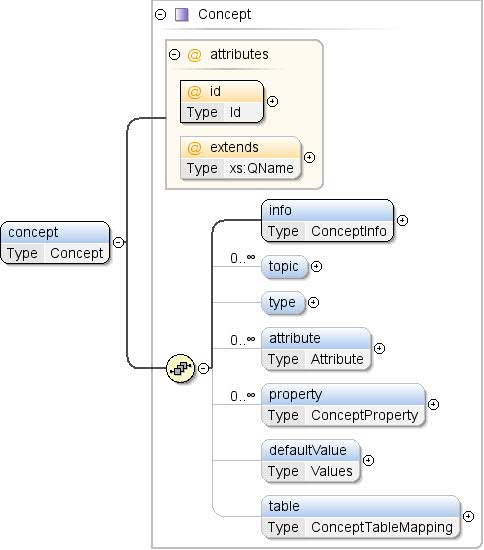 |
| Type | [Concept](https://developers.google.com/public-data/docs/schema/dspl6#id37) |
| Properties | | content: | complex | | maxOccurs: | unbounded | |---|---| |
| Model | [info](https://developers.google.com/public-data/docs/schema/dspl6#id38) , [topic\*](https://developers.google.com/public-data/docs/schema/dspl6#id43) , [type{0,1}](https://developers.google.com/public-data/docs/schema/dspl6#id45) , [attribute\*](https://developers.google.com/public-data/docs/schema/dspl6#id47) , [property\*](https://developers.google.com/public-data/docs/schema/dspl6#id48) , [defaultValue{0,1}](https://developers.google.com/public-data/docs/schema/dspl6#id57) , [table{0,1}](https://developers.google.com/public-data/docs/schema/dspl6#id58) |
| Children | [attribute](https://developers.google.com/public-data/docs/schema/dspl6#id47), [defaultValue](https://developers.google.com/public-data/docs/schema/dspl6#id57), [info](https://developers.google.com/public-data/docs/schema/dspl6#id38), [property](https://developers.google.com/public-data/docs/schema/dspl6#id48), [table](https://developers.google.com/public-data/docs/schema/dspl6#id58), [topic](https://developers.google.com/public-data/docs/schema/dspl6#id43), [type](https://developers.google.com/public-data/docs/schema/dspl6#id45) |
| Instance | ``` {1,1} {0,unbounded} {0,1} {0,unbounded} {0,unbounded} {0,1} ``` |
| Attributes | | QName | Type | Fixed | Default | Use | Annotation | | [extends](https://developers.google.com/public-data/docs/schema/dspl6#id67) | xs:QName | | | optional | The unique identifier of a concept that this concept extends. The referenced concept may be defined in the same dataset or externally, i.e., in another dataset. A reference to an external concept must be of the form "prefix:other_concept_id", where "prefix" is the prefix used for the namespace of the external dataset (see XML namespaces). | | [id](https://developers.google.com/public-data/docs/schema/dspl6#id66) | [Id](https://developers.google.com/public-data/docs/schema/dspl19#id33) | | | required | The unique identifier of the concept, which must be globally unique within the dataset. | |---|---|---|---|---|---| |
| Source | ``` ``` |
|---|---|
## Element: [dspl](https://developers.google.com/public-data/docs/schema/dspl9#id1) / slices
| Namespace | http://schemas.google.com/dspl/2010 |
| Annotations | A list of slices defined in this dataset. |
| Diagram |  |
| Properties | | content: | complex | | minOccurs: | 0 | |---|---| |
| Model | [slice+](https://developers.google.com/public-data/docs/schema/dspl9#id69) |
| Children | [slice](https://developers.google.com/public-data/docs/schema/dspl9#id69) |
| Instance | ``` {1,unbounded} ``` |
| Source | ``` A list of slices defined in this dataset. ``` |
|---|---|
## Element: [dspl](https://developers.google.com/public-data/docs/schema/dspl9#id1) / [slices](https://developers.google.com/public-data/docs/schema/dspl9#id68) / slice
| Namespace | http://schemas.google.com/dspl/2010 |
| Diagram | 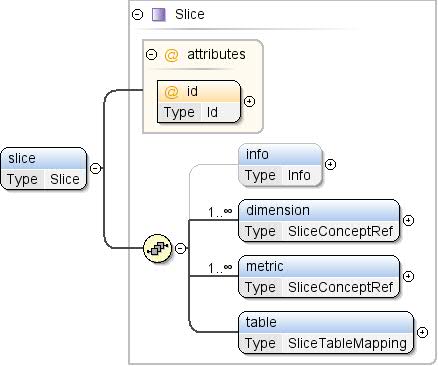 |
| Type | [Slice](https://developers.google.com/public-data/docs/schema/dspl2#id70) |
| Properties | | content: | complex | | maxOccurs: | unbounded | |---|---| |
| Model | [info{0,1}](https://developers.google.com/public-data/docs/schema/dspl2#id71) , [dimension+](https://developers.google.com/public-data/docs/schema/dspl2#id72) , [metric+](https://developers.google.com/public-data/docs/schema/dspl2#id75) , [table](https://developers.google.com/public-data/docs/schema/dspl2#id76) |
| Children | [dimension](https://developers.google.com/public-data/docs/schema/dspl2#id72), [info](https://developers.google.com/public-data/docs/schema/dspl2#id71), [metric](https://developers.google.com/public-data/docs/schema/dspl2#id75), [table](https://developers.google.com/public-data/docs/schema/dspl2#id76) |
| Instance | ``` {0,1} {1,unbounded} {1,unbounded} ``` |
| Attributes | | QName | Type | Fixed | Default | Use | Annotation | | [id](https://developers.google.com/public-data/docs/schema/dspl2#id85) | [Id](https://developers.google.com/public-data/docs/schema/dspl19#id33) | | | required | The unique identifier of the slice. | |---|---|---|---|---|---| |
| Source | ``` ``` |
|---|---|
## Element: [dspl](https://developers.google.com/public-data/docs/schema/dspl9#id1) / tables
| Namespace | http://schemas.google.com/dspl/2010 |
| Annotations | A list of tables defined in this dataset. |
| Diagram |  |
| Properties | | content: | complex | | minOccurs: | 0 | |---|---| |
| Model | [table+](https://developers.google.com/public-data/docs/schema/dspl9#id87) |
| Children | [table](https://developers.google.com/public-data/docs/schema/dspl9#id87) |
| Instance | ``` ``` |
| Source | ``` A list of tables defined in this dataset. ``` |
|---|---|
## Element: [dspl](https://developers.google.com/public-data/docs/schema/dspl9#id1) / [tables](https://developers.google.com/public-data/docs/schema/dspl9#id86) / table
| Namespace | http://schemas.google.com/dspl/2010 |
| Diagram | 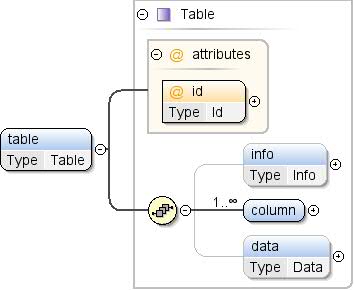 |
| Type | [Table](https://developers.google.com/public-data/docs/schema/dspl10#id88) |
| Properties | | content: | complex | | maxOccurs: | unbounded | |---|---| |
| Model | [info{0,1}](https://developers.google.com/public-data/docs/schema/dspl10#id89) , [column+](https://developers.google.com/public-data/docs/schema/dspl10#id90) , [data{0,1}](https://developers.google.com/public-data/docs/schema/dspl10#id97) |
| Children | [column](https://developers.google.com/public-data/docs/schema/dspl10#id90), [data](https://developers.google.com/public-data/docs/schema/dspl10#id97), [info](https://developers.google.com/public-data/docs/schema/dspl10#id89) |
| Instance | ``` {0,1} {1,unbounded} {0,1}
``` |
| Attributes | | QName | Type | Fixed | Default | Use | Annotation | | [id](https://developers.google.com/public-data/docs/schema/dspl10#id102) | [Id](https://developers.google.com/public-data/docs/schema/dspl19#id33) | | | required | The unique identifier of the table in the dataset. | |---|---|---|---|---|---| |
| Source | ``` ``` |
|---|---|
## Attribute: [dspl](https://developers.google.com/public-data/docs/schema/dspl9#id1) / [import](https://developers.google.com/public-data/docs/schema/dspl9#id2) / @namespace
| Namespace | No namespace |
| Annotations | The namespace of the imported dataset, specified as a URI. A prefix must be associated with this namespace before its contents can be referenced. See \[XML Namespaces\] for more information about the use of namespaces and prefixes in XML. |
| Properties | | use: | required | |---|---| |
| Used by | | Element | [dspl/import](https://developers.google.com/public-data/docs/schema/dspl9#id2) | |---|---| |
| Source | ``` The namespace of the imported dataset, specified as a URI. A prefix must be associated with this namespace before its contents can be referenced. See [XML Namespaces] for more information about the use of namespaces and prefixes in XML. ``` |
|---|---|
## Attribute: [dspl](https://developers.google.com/public-data/docs/schema/dspl9#id1) / [import](https://developers.google.com/public-data/docs/schema/dspl9#id2) / @location
| Namespace | No namespace |
| Annotations | An optional location where the definition of the imported dataset can be found, specified as a URL. If the location is omitted, the system processing this DSPL dataset must already know the imported dataset. Implementation note: The Google dataset importer ignores the location attribute. Any imported dataset must be known by the Google importer beforehand. |
| Properties | | use: | optional | |---|---| |
| Used by | | Element | [dspl/import](https://developers.google.com/public-data/docs/schema/dspl9#id2) | |---|---| |
| Source | ``` An optional location where the definition of the imported dataset can be found, specified as a URL. If the location is omitted, the system processing this DSPL dataset must already know the imported dataset. Implementation note: The Google dataset importer ignores the location attribute. Any imported dataset must be known by the Google importer beforehand. ``` |
|---|---|
## Attribute: [dspl](https://developers.google.com/public-data/docs/schema/dspl9#id1) / @targetNamespace
| Namespace | No namespace |
| Annotations | Each dataset may provide a target namespace. The target namespace is a URI that uniquely identifies the dataset. For more information about the use of namespaces in XML, see: http://www.w3.org/TR/REC-xml-names/ If no targetNamespace is provided, then a namespace will be generated when the dataset is imported. |
| Type | xs:anyURI |
| Properties | | use: | optional | |---|---| |
| Used by | | Element | [dspl](https://developers.google.com/public-data/docs/schema/dspl9#id1) | |---|---| |
| Source | ``` Each dataset may provide a target namespace. The target namespace is a URI that uniquely identifies the dataset. For more information about the use of namespaces in XML, see: http://www.w3.org/TR/REC-xml-names/ If no targetNamespace is provided, then a namespace will be generated when the dataset is imported. ``` |
|---|---|
Created using the
[oXygen XML Editor](http://www.oxygenxml.com).